
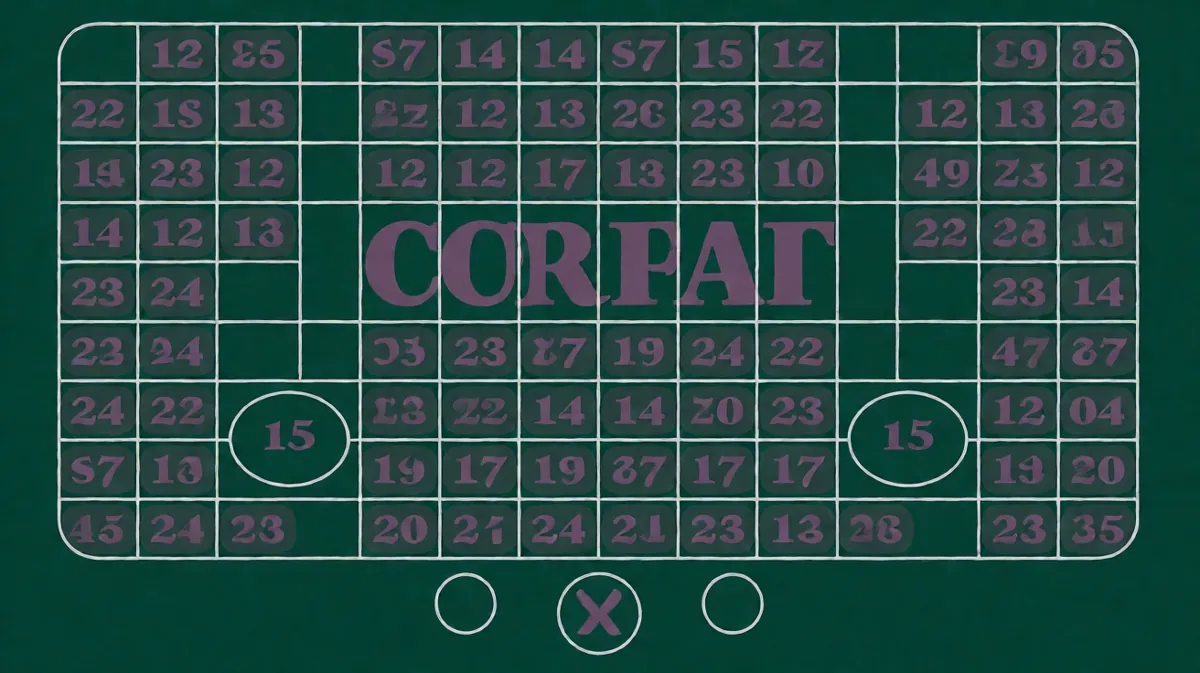
The COME area spans the full width of the craps layout, sitting between the Field bet strip and the numbered box points (4, 5, 6, 8, 9, 10). Knowing exactly where it is — and what surrounds it — makes your first live session far less confusing.
What Does the Craps Table Layout Actually Look Like?
A standard craps layout is mirrored: the same betting areas repeat on both the left and right wings, served by a dealer on each side. The center of the table holds proposition bets managed by the stickman. Most players stand along one wing and never need to cross to the other.
Working outward from the rail, the main betting zones run roughly in this order: Pass Line (the long strip hugging the edge nearest the players), the Field (one roll bets on 2, 3, 4, 9, 10, 11, or 12), then the wide COME area, and finally the row of box-number squares across the top.
For a full orientation to every zone on the felt, see our Craps Rules and Table Layout: A Beginner's Starting Point.
Where Exactly Is the COME Area?
The COME box is the large, open rectangle printed in the center of the layout. It runs edge to edge — roughly as wide as the table itself. That size is intentional. Multiple players can drop chips there simultaneously, and the dealer needs room to move bets up to their individual box numbers after the next roll.
You place the flat bet yourself, directly into the COME area. No dealer assistance needed for that step. The dealer takes over once your bet travels to a box number.
Why Does Placement on the Layout Matter?
The physical position of your chip tells the dealer everything. A chip in the COME area means: resolve this on the very next roll, then send it to whichever box number comes up. A chip on the Pass Line means something different — it was placed before the come-out roll and follows the shooter's main point, not its own.
That timing distinction is the heart of the come bet. If you want the full explanation of what happens after the chip travels, read What Is a Come Bet in Craps? The Beginner Answer.
What Surrounds the COME Area?
- Box numbers (top row): 4, 5, Six, 8, Nine, 10 — your come bet travels here after the first roll lands on one of these.
- Field bet (below COME): A one-roll wager on a different set of numbers; visually close to COME but mechanically unrelated.
- Pass Line (outer edge): The foundational pre-come-out wager. Looks similar to COME but is placed before the round begins.
- Don't Come bar (small box near COME): The mirror-opposite wager. Learn how it compares on our Don't Come vs Come Bet page.
The ON Puck — Your Visual Cue
A white plastic disc called the puck sits on the layout. When it reads ON and rests on a box number, a point is established and come bets are allowed. When it reads OFF and sits in the corner, the shooter is on the come-out roll and you cannot yet place a come bet.
This is the single most important visual check before reaching for your chips. According to Casino.org's craps come bet guide, the puck position is the clearest signal on the whole table for when come bets are live.
Must be 21+ to play real-money craps (18+ in some states). Gambling problem? Call 1-800-GAMBLER.
Once you're comfortable reading the layout, the next step is understanding the two-roll resolution cycle. Our page on How the Come Bet Works: Two Rolls, Two Phases walks through both phases in detail. And if you want to see how stacking multiple come bets across the box numbers can lower your combined house edge, check out the Three Point Molly strategy.